
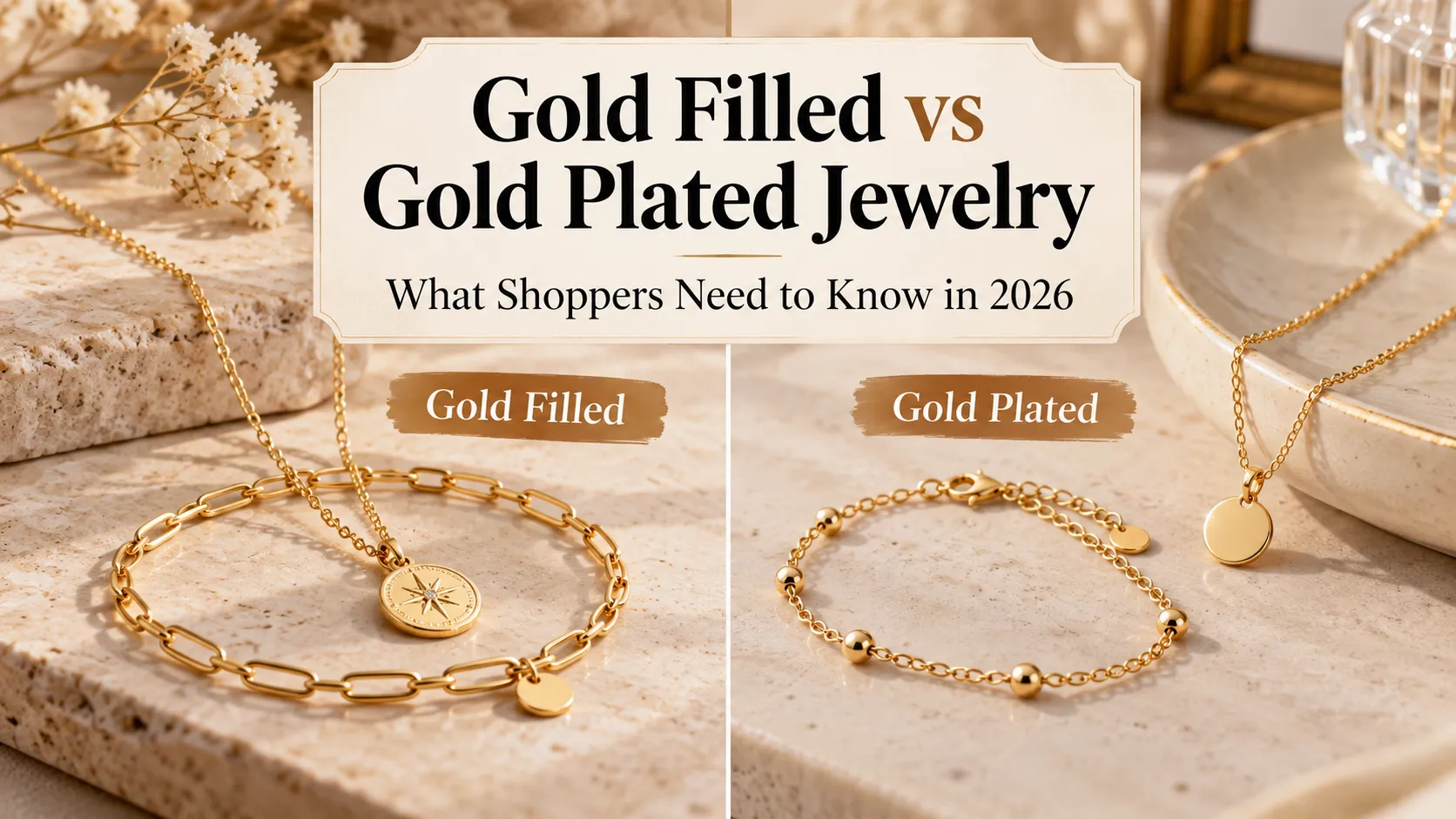
Shopping for gold jewelry can get surprisingly confusing. Two necklaces might have the same beautiful golden finish, similar designs, and nearly identical product photos, yet one costs considerably more than the other. Often, the difference comes down to something you can’t immediately see: whether the jewelry is gold-filled or gold-plated. Understanding that distinction can help shoppers avoid spending money on pieces that don’t meet their expectations.
For anyone comparing gold filled vs gold plated jewelry in 2026, appearance is only part of the decision. Durability, everyday comfort, maintenance, and long-term value all deserve attention. Both materials have their advantages, but they’re suited to different budgets and wearing habits. Before choosing your next bracelet, necklace, or pair of earrings, it helps to understand exactly what you’re paying for.
What Is the Difference Between Gold-Filled and Gold-Plated Jewelry?
The biggest difference between gold-filled and gold-plated jewelry is how much gold is used and how it’s attached to the underlying metal.
Gold-filled jewelry is made by mechanically bonding a relatively thick layer of real gold alloy to a base metal, usually brass. Despite its name, it isn’t filled with solid gold. The gold forms the outer surface of the piece.
In the United States, jewelry labeled gold-filled generally contains a gold-alloy layer accounting for at least 5% of the item’s total metal weight.
Gold-plated jewelry, on the other hand, has a much thinner coating of gold applied to a base metal through an electroplating process.
Both can look beautiful when new. The difference becomes more noticeable after months or years of use.
Gold-filled jewelry typically offers better resistance to everyday wear, while gold-plated pieces are usually more affordable.
Why Gold-Filled Jewelry Is Often Worth the Extra Money
Imagine purchasing a delicate gold bracelet you plan to wear almost every day. You want something that looks good with casual clothes, office outfits, and special occasion dresses without constantly worrying about its finish.
This is where gold-filled jewelry becomes appealing.
Because it contains a substantially thicker layer of gold than ordinary gold-plated jewelry, it generally holds up better against regular friction and handling.
With appropriate care, a well-made gold-filled bracelet or necklace can maintain its appearance for years.
However, gold-filled jewelry isn’t completely resistant to damage. Frequent exposure to chemicals, harsh cleaning products, and continuous rubbing can eventually affect its surface.
Construction quality matters too. Some jewelry pieces may have gold-filled chains but clasps or decorative components made from different materials.
That’s why reading the complete product description is important before buying.
For someone building a smaller collection of jewelry they intend to wear regularly, gold-filled pieces can offer better long-term value.
When Gold-Plated Jewelry Is the Smarter Choice
Gold-plated jewelry shouldn’t automatically be considered a poor investment.
In fact, it can be a practical choice for shoppers who enjoy experimenting with different accessories.
Consider a pair of statement earrings purchased for a wedding, birthday celebration, or holiday party. If you’ll wear them only occasionally, spending more on gold-filled construction might not be necessary.
Gold plating makes fashionable designs accessible without requiring a large budget.
It’s also useful when you’re unsure whether a particular style will become part of your everyday wardrobe.
For example, you might love the appearance of oversized gold chains today but prefer delicate necklaces a few months later.
Choosing an affordable gold-plated version allows you to try the look without making a major financial commitment.
The important thing is understanding that not all gold plating is identical.
Some jewelry has extremely thin coatings, while other pieces feature thicker plating intended to improve durability.
A necklace labeled 18K gold-plated isn’t necessarily more durable than one labeled 14K gold-plated. The thickness of the coating and the quality of the underlying construction also matter.
Which Lasts Longer: Gold-Filled or Gold-Plated Jewelry?
For most everyday uses, gold-filled jewelry will generally last longer than conventional gold-plated jewelry.
Still, lifespan depends heavily on how a piece is worn and maintained.
Rings experience frequent friction because your hands constantly touch desks, phones, bags, and other surfaces.
Bracelets can rub against clothing and furniture throughout the day.
Necklaces may experience less friction, particularly when worn over clothing, although this depends on their design.
Someone wearing a gold-plated ring daily may notice fading or exposed base metal sooner than someone who wears a plated pendant only a few times per month.
Proper care can make a significant difference for both materials.
A few helpful habits include:
- Remove jewelry before swimming, showering, or using household cleaning products.
- Apply perfume, sunscreen, and lotions before putting on jewelry.
- Wipe pieces gently with a clean, soft cloth after wearing them.
- Store necklaces and bracelets separately to prevent scratching and tangling.
- Avoid abrasive polishing products or harsh jewelry-cleaning chemicals unless approved by the manufacturer.
Gold-filled jewelry may require less frequent replacement, but it still benefits from careful handling.
Is Gold-Filled Jewelry Better for Sensitive Skin?
Sensitive skin is another reason shoppers compare these two materials.
Gold-filled jewelry generally provides a thicker gold-alloy surface between the skin and the underlying base metal.
For some people, that can make it a more comfortable option than conventional gold-plated jewelry.
However, gold-filled doesn’t automatically mean hypoallergenic.
Gold alloys can contain other metals, and certain clasps or connecting components may contain materials that cause irritation.
Gold-plated jewelry introduces another consideration. As the gold coating wears away, the underlying metal can become exposed.
People with known nickel allergies should pay particular attention to material descriptions.
Instead of relying on labels such as “skin-friendly” or “hypoallergenic,” look for clear information about the metals used throughout the jewelry.
For highly sensitive skin, verified nickel-free options or suitable solid precious-metal jewelry may be worth considering.
What to Check Before Buying Gold Jewelry in 2026
Online shopping makes comparing jewelry convenient, but product photographs don’t always reveal material quality.
A beautifully photographed necklace might look expensive even when it contains only a thin layer of gold.
Before purchasing, take a closer look at the description.
For gold-filled jewelry, markings such as “1/20 14K GF” can provide useful information about its construction.
The marking indicates a 14K gold-alloy layer representing 1/20 of the item’s total metal weight.
For gold-plated jewelry, check whether the retailer identifies the underlying metal and provides details about plating thickness.
You may also encounter the term “gold vermeil.”
Gold vermeil is different from ordinary gold plating because it uses a sterling silver base and must meet specific standards concerning the gold layer’s purity and thickness under US guidelines.
It’s also different from gold-filled jewelry.
Beyond material descriptions, consider the quality of clasps, warranty information, repair options, and return policies.
A slightly more expensive piece from a retailer that clearly discloses materials and offers reasonable customer support may be a better purchase than an inexpensive item with vague specifications.
Should You Buy Gold-Filled or Gold-Plated Jewelry?
The right choice depends on how frequently you intend to wear the jewelry and what matters most to your budget.
If you’re purchasing a simple necklace, delicate bracelet, or everyday earrings that you expect to wear regularly, gold-filled jewelry is often worth the additional upfront cost.
Its thicker gold layer makes it an appealing alternative for shoppers who want better durability without paying solid-gold prices.
If you’re shopping for occasional accessories, experimenting with new styles, or buying jewelry for a specific event, gold-plated pieces can offer attractive designs at a more accessible price.
Neither option is automatically right for everyone.
The best purchase is one that matches your lifestyle, expectations, and willingness to maintain the piece. Understanding the material before buying gives you a better chance of choosing jewelry you’ll continue enjoying long after the first wear.