
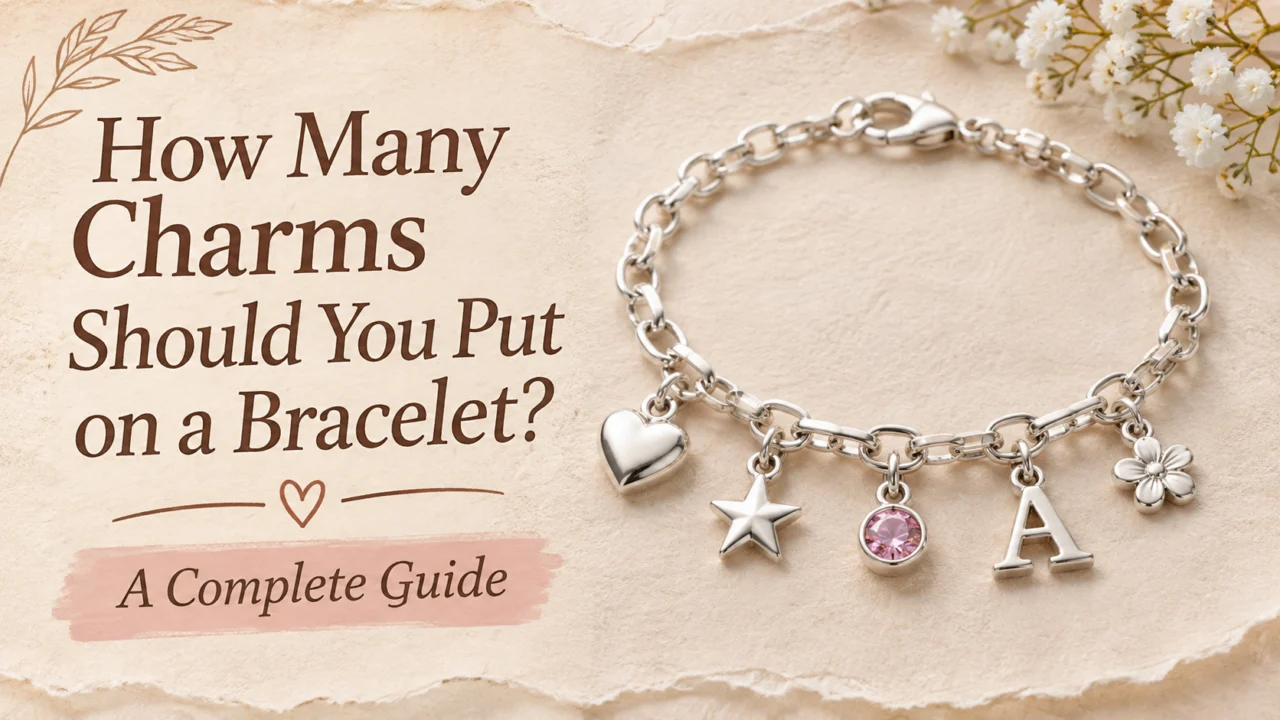
How many charms should you put on a bracelet? The answer depends on your bracelet’s size, the type of charms you’re using, and how you want your jewelry to look and feel.
For most traditional charm bracelets, 3 to 7 charms make a comfortable, attractive starting point. Some people prefer a single meaningful charm, while others enjoy a fuller bracelet featuring 10 or more.
There’s no universal rule, but adding too many charms can make a bracelet heavy, crowded, or uncomfortable.
This guide explains how to choose the right number of charms, balance their placement, and build a bracelet that looks beautiful without sacrificing comfort.
How Many Charms Should Be on a Bracelet?
The ideal number of charms varies depending on the bracelet design and the size of each charm.
Here’s a general guide for traditional chain-style charm bracelets.
| Number of Charms | Bracelet Appearance | Best For |
|---|---|---|
| 1–2 charms | Minimal and delicate | Everyday jewelry and simple gifts |
| 3–5 charms | Light and balanced | Beginners and understated styles |
| 6–8 charms | Moderately full | Personalized collections |
| 9–12 charms | Full and decorative | Statement bracelets |
| 13+ charms | Very full and layered | Established collections with suitable bracelets |
These ranges are styling suggestions, not strict limits.
For example, five large dangling charms might occupy more space than ten tiny charms. The bracelet’s construction and available space matter more than the number alone.
A good starting point is three charms, especially if you’re building your first bracelet. You can gradually add more as you discover meaningful designs.
What Determines How Many Charms Fit on a Bracelet?
Before choosing charms, consider the bracelet’s length, construction, and the size of the decorations.
1. Bracelet Length and Wrist Size
A longer bracelet generally offers more room for charms, but wrist size also affects how the bracelet sits.
A bracelet that fits closely around your wrist may have limited room for additional charms. A slightly looser bracelet can allow more movement.
However, extra length doesn’t automatically mean you should add more charms.
Too many heavy charms can pull the bracelet downward or make it rotate excessively.
For traditional chain charm bracelets, measure your wrist and follow the manufacturer’s sizing recommendations. Many designs need some extra room for movement, but the appropriate allowance depends on the chain, clasp, and charm style.
2. Charm Size and Shape
Charm dimensions make a significant difference.
Small, flat charms generally take up less visual space than large, three-dimensional designs.
For example:
- Tiny heart or star charms can create a delicate collection.
- Medium-sized initial charms work well in balanced arrangements.
- Large lockets or sculptural charms may need more space.
- Dangling charms require enough clearance to avoid excessive overlap.
If you love oversized charms, fewer pieces often create a more intentional appearance.
3. Charm Weight
Charm weight is just as important as charm size.
A bracelet containing several solid metal charms may feel noticeably heavier than one decorated with hollow or lightweight designs.
Heavy charms can increase pressure on the bracelet’s links, jump rings, and clasp.
Pay particular attention to weight when choosing sterling silver or solid gold charms.
There isn’t a universal safe weight limit for charm bracelets. The appropriate load depends on the bracelet’s construction and the manufacturer’s specifications.
4. Bracelet Style
Different bracelets accommodate charms in different ways.
A traditional chain bracelet uses attachment points along its links, while a bead-style bracelet holds charms along a central chain or cord.
Italian charm bracelets use interchangeable flat links, making their capacity different from dangling charm designs.
Always consider how the charms attach before deciding on a number.
How Many Charms Should You Put on Different Bracelet Styles?
<escape>Not all charm bracelets follow the same styling rules.</escape>
Traditional Chain Charm Bracelets
For a classic chain bracelet with dangling charms, 3 to 7 charms are a practical starting range.
This creates enough decoration to personalize the bracelet without immediately filling every available space.
You might begin with:
- One initial charm
- One birthstone charm
- One meaningful symbol
- Two decorative charms
This combination creates a personal bracelet while leaving room for future additions.
If you prefer a fuller look, you can gradually add more charms, provided the bracelet and attachments can support them.
Bead-Style Charm Bracelets
Bead-style bracelets, including many Pandora-style designs, often hold more charms than traditional dangling chain bracelets.
Their capacity depends on the bracelet length, charm width, spacers, clips, and other decorative elements.
A bracelet with several large decorative beads may fill up quickly, while smaller beads leave more space.
It’s best to start with a modest selection and add charms gradually.
Avoid assuming that every bead-style bracelet can safely hold the same number of charms. Always check the manufacturer’s recommendations for your specific model.
Italian Charm Bracelets
Italian charm bracelets have a different structure.
Instead of hanging from a chain, decorative charms are incorporated into individual expandable bracelet links.
The total number of links determines the bracelet’s length and fit.
Many standard-size Italian charm bracelets use approximately 17 to 19 links, although the correct number varies by wrist size, link dimensions, and manufacturer.
You can decorate every compatible link or alternate decorative links with plain ones.
For example, an 18-link bracelet might feature six decorative charm links and twelve plain links.
With Italian charm bracelets, the most important factor is choosing the correct number of links for your wrist, rather than filling the bracelet with a specific number of decorative designs.
Bangle Charm Bracelets
Bangle bracelets typically look best with a smaller collection of charms.
Depending on the design, one to five charms can create an attractive arrangement.
Large dangling charms may bunch together at the bottom of a rigid bangle, so it’s important to consider how they move.
Some bangles aren’t designed to accommodate additional charms at all. Choose a charm-compatible bangle and use the attachment method recommended by its manufacturer.
How to Space Charms Evenly on a Bracelet
The number of charms matters, but their placement can make an equally noticeable difference.
A bracelet with five thoughtfully arranged charms may look more balanced than one with ten charms clustered in the same area.
Start With a Centerpiece Charm
Choose one charm that represents the bracelet’s main theme.
It could be a birthstone, initial, meaningful symbol, or travel souvenir.
Place it near the visual center of your arrangement.
Keep in mind that dangling charms naturally move around the wrist, so a center charm won’t necessarily remain in the same position throughout the day.
Arrange Smaller Charms Around It
Use smaller charms to complement the centerpiece.
For example, a five-charm arrangement might look like this:
Small star – Heart – Initial – Birthstone – Small star
This creates a balanced visual pattern without requiring every charm to be identical.
You can also alternate charm shapes and lengths for a more relaxed appearance.
Leave Some Breathing Room
Avoid placing large dangling charms so close together that they constantly tangle.
If the bracelet has multiple available attachment points, leave some space between bulky charms.
For bead-style bracelets, use compatible spacers or clips where appropriate for the specific bracelet design.
Not every bracelet needs empty sections, but thoughtful spacing can make charms easier to see and enjoy.
Is It Bad to Put Too Many Charms on a Bracelet?
Adding many charms isn’t automatically harmful, but overcrowding can create practical problems.
A heavily decorated bracelet may become uncomfortable, especially during activities involving frequent wrist movement.
Potential issues include:
- Excessive weight: Heavy charms may make the bracelet uncomfortable.
- Increased wear: Charms can repeatedly rub against neighboring pieces.
- Attachment stress: Additional weight may place strain on jump rings, links, and clasps.
- Tangling: Long dangling charms can catch on one another.
- Restricted movement: Closely packed charms may reduce flexibility on certain bracelet styles.
These concerns don’t mean you need to limit your collection permanently.
Instead, consider rotating charms between multiple bracelets.
You can create one bracelet for everyday wear and another for special occasions.
How Many Charms Look Best for Everyday Wear?
For everyday jewelry, a smaller number of charms is often easier to manage.
A bracelet featuring three to five modestly sized charms can offer personalization without creating excessive bulk.
This is particularly useful if you type frequently, work with your hands, or prefer lightweight accessories.
Consider choosing flatter charms with smooth edges.
Avoid large dangling pieces that repeatedly catch on sleeves, desks, or bags.
If you prefer a statement look, you can still wear a fuller bracelet. Just pay attention to how comfortably it moves throughout your normal activities.
How Many Charms Should You Give as a Gift?
A charm bracelet makes a thoughtful gift because it can grow with the recipient’s experiences.
You don’t need to fill the bracelet before giving it.
For a first charm bracelet, one to three meaningful charms often make a lovely starting collection.
Some thoughtful combinations include:
- Birthday gift: An initial charm and birthstone charm.
- Anniversary gift: A heart charm and a meaningful date charm.
- Graduation gift: A graduation symbol and initial charm.
- Friendship gift: Matching symbolic charms.
- Travel gift: A destination charm representing a special trip.
Leaving room for additional charms allows the recipient to personalize the bracelet over time.
Before purchasing, confirm the bracelet’s size and whether the charms are compatible with its attachment system.
Should You Fill Every Space on a Charm Bracelet?
No. A charm bracelet doesn’t have to be completely full to look finished.
In fact, some of the most versatile designs include open spaces that highlight individual charms.
A minimalist bracelet with three carefully selected pieces can look just as intentional as a fully decorated bracelet.
Leaving available space also gives you flexibility.
You might add charms to celebrate birthdays, anniversaries, vacations, or personal achievements.
A bracelet that gradually develops over time can become a meaningful collection rather than simply an accessory.
However, certain designs, such as Italian link bracelets, require enough structural links to achieve a secure fit. In those cases, plain links can fill the remaining positions.
Tips for Building a Balanced Charm Bracelet
If you’re unsure how many charms to add, follow these practical guidelines.
- Begin with three charms. Choose pieces that represent something meaningful.
- Check the bracelet’s fit. Make sure it remains comfortable with the charms attached.
- Mix charm sizes carefully. Combine smaller decorative pieces with one or two focal charms.
- Distribute the weight. Avoid concentrating several heavy charms on one small section.
- Inspect attachments. Confirm that jump rings, clasps, and connectors are secure and compatible.
- Add charms gradually. Wear the bracelet before deciding whether it needs more decoration.
- Respect the bracelet’s design limits. Follow the manufacturer’s guidance rather than relying solely on appearance.
A well-balanced charm bracelet should feel comfortable, move naturally, and reflect your personal style.
Frequently Asked Questions
Is five charms too many for a bracelet?
No. Five charms are often an excellent choice for a traditional charm bracelet. They offer enough variety to create a personalized design without necessarily making it feel crowded. Charm size, weight, and bracelet construction still matter.
Can you wear a charm bracelet with just one charm?
Absolutely. A single charm creates a minimalist look and can highlight a meaningful symbol, initial, or gemstone. It’s also a practical way to begin collecting charms.
How many charms fit on a 7-inch bracelet?
There isn’t a fixed number. A 7-inch chain bracelet might comfortably accommodate several small dangling charms, while a bead-style bracelet’s capacity depends on the width of each bead and the fit on your wrist. Check the bracelet’s usable space and manufacturer guidance.
Do charms make a bracelet tighter?
They can, particularly on bead-style bracelets where charms occupy space around the wrist. Traditional dangling charms usually affect the weight more than the bracelet’s internal circumference, although bulky attachment hardware can also influence comfort.
Is an odd or even number of charms better?
Neither is required. Odd numbers, such as three or five, can create a natural focal point, while even numbers work well for symmetrical arrangements. Choose the layout that looks and feels best to you.
Finding the Right Number of Charms for Your Bracelet
So, how many charms should you put on a bracelet? For a traditional chain charm bracelet, three to seven charms are a sensible starting point, but the ideal number ultimately depends on the bracelet’s design, charm dimensions, and your preferences.
A few meaningful pieces can create an elegant everyday accessory, while a fuller collection can tell a more detailed personal story.
Start with charms you genuinely love, pay attention to fit and weight, and leave room for your bracelet to evolve. The best charm bracelet isn’t necessarily the one with the most charms—it’s the one you enjoy wearing.