
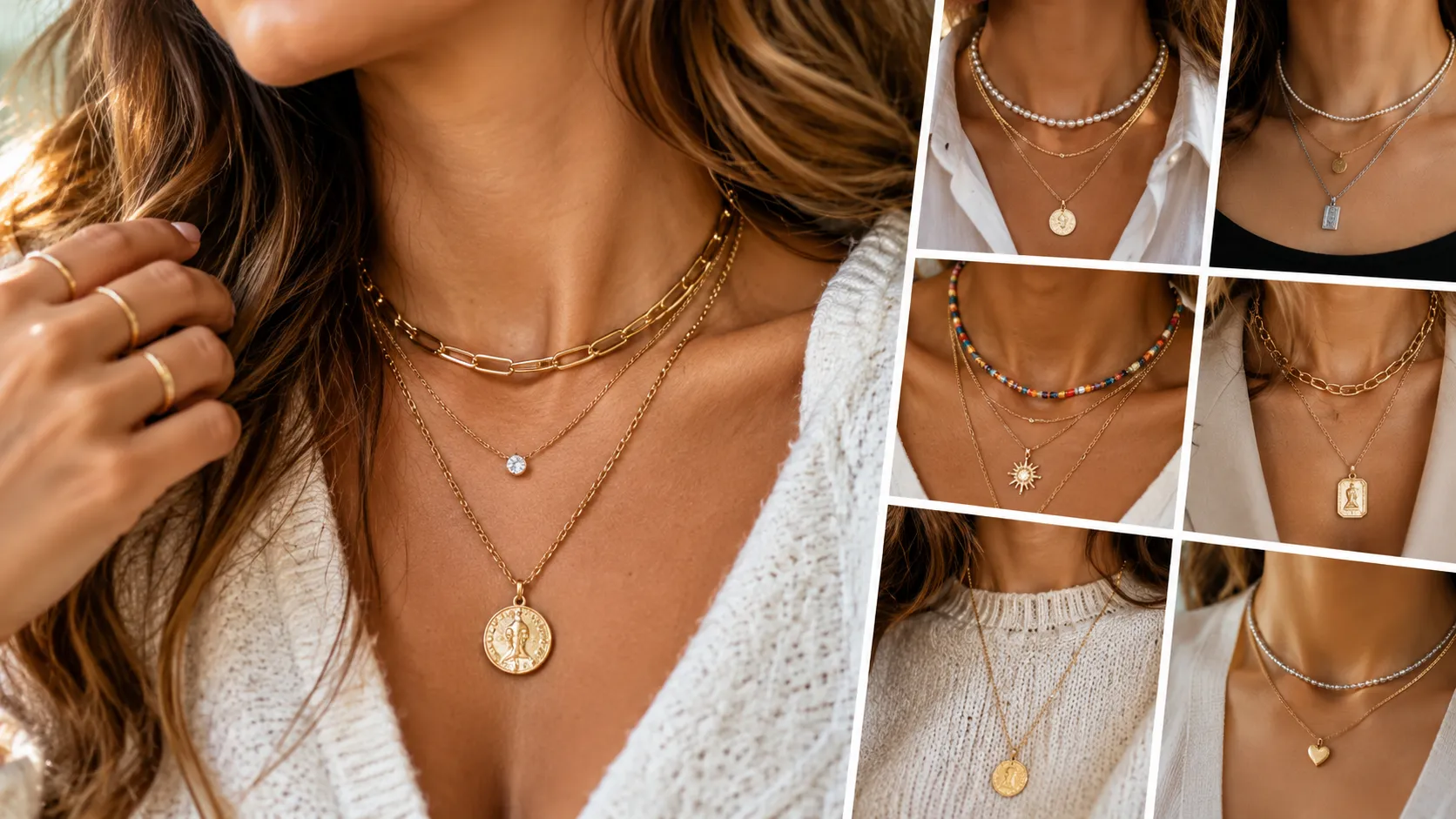
A plain white T-shirt, your favorite jeans, and a few carefully chosen necklaces can completely change the way an outfit looks. Layered necklaces are getting plenty of attention in 2026, with delicate chains, meaningful pendants, colorful beads, and mixed metals creating combinations that feel effortlessly personal. Instead of buying expensive statement jewelry, many of these looks can be recreated using pieces you already have sitting in your jewelry box.
What makes layered necklaces especially appealing is how easily they adapt to different personal styles. Some people prefer two simple gold chains, while others enjoy mixing silver, pearls, and vintage-inspired charms. The trick isn’t wearing as many necklaces as possible. It’s finding the right balance between lengths, textures, and proportions. These nine styling ideas can help you turn even the simplest jewelry collection into something interesting and wearable.
Why Layered Necklaces Are Getting Attention in 2026
Necklace layering has been around for years, but the approach feels less restrictive in 2026. Instead of wearing perfectly matching chains, jewelry styling increasingly embraces different materials, unexpected combinations, and personal details.
A delicate necklace inherited from a family member can look beautiful next to a modern paperclip chain. A simple silver pendant might work surprisingly well with a gold necklace.
This flexibility makes layering particularly practical for everyday wardrobes. You don’t need an entirely new collection to experiment with different looks.
The following ideas offer simple ways to make your favorite necklaces work together.
1. Start With Three Necklaces of Different Lengths
One of the easiest ways to create an attractive layered necklace combination is to choose three different lengths.
For example, you might wear a 16-inch chain near your collarbone, an 18-inch necklace with a small pendant, and a 20-inch chain underneath.
The spacing allows each necklace to remain visible without making the arrangement look crowded.
These measurements are only starting points. Necklace placement depends on your neck size, body proportions, and the style of each piece.
If you’re new to layering, start with two necklaces and add a third once you find a combination you like.
2. Mix Gold and Silver for a Modern Look
Matching every piece of jewelry used to feel almost mandatory. Fortunately, mixing metals gives you more freedom to wear the pieces you love.
A delicate sterling silver chain can look beautiful alongside a yellow gold pendant. The contrast creates visual interest without requiring oversized jewelry.
Try pairing a silver snake chain with a simple gold necklace. Alternatively, wear a small gold charm between two understated silver chains.
For a cohesive appearance, repeat one of the metals somewhere else in your accessories.
A pair of silver earrings or a gold bracelet can help connect the overall look.
3. Make a Meaningful Pendant Your Centerpiece
Sometimes the most interesting necklace isn’t the most expensive one.
An initial pendant, birthstone, small locket, or family heirloom can become the centerpiece of a layered jewelry look.
Choose one necklace that carries personal meaning and surround it with simpler chains.
For example, an 18-inch initial necklace can sit between a delicate 16-inch chain and a longer 22-inch necklace.
The surrounding pieces add dimension without taking attention away from the pendant.
This approach also makes sentimental jewelry easier to incorporate into everyday outfits.
4. Pair a Chunky Chain With a Delicate Necklace
Combining necklaces with different thicknesses creates contrast that can make a simple outfit feel more polished.
A medium-width curb chain paired with a thin pendant necklace is an easy combination to try.
The thicker chain provides structure, while the delicate necklace adds softness.
For a balanced arrangement, try wearing the chunky chain around 16 inches and the pendant necklace closer to 20 inches.
You can wear this combination with a plain crewneck shirt, an open-collar blouse, or a simple black dress.
There’s no need to choose an oversized statement chain. Even a slightly thicker everyday necklace can create enough contrast.
5. Add Pearls to Your Everyday Necklace Layers
Pearls aren’t limited to weddings, formal dinners, or special occasions.
A short pearl necklace layered with a delicate gold chain can look surprisingly relaxed when paired with casual clothing.
Small freshwater pearls are especially versatile because they offer texture without overwhelming the rest of your jewelry.
Try wearing a pearl necklace with a simple white button-down shirt and an understated gold pendant.
You can also pair a single pearl pendant with a sterling silver chain for something more minimal.
Remember that pearls require gentle care. Apply perfume and skincare products before putting them on, and wipe them with a soft cloth after wearing.
6. Introduce Color With Beaded Necklaces
Gold and silver aren’t your only options when building necklace layers.
Colorful beads can bring a playful touch to otherwise simple jewelry combinations.
Consider a necklace with small gemstone beads, glass beads, or subtle enamel details.
A turquoise-colored beaded necklace can look fresh alongside a delicate gold chain, especially with a white linen shirt or summer dress.
Soft pink, pale green, and deep blue beads can also complement neutral clothing.
You don’t have to match every color perfectly. Sometimes a small unexpected detail is what makes the combination interesting.
If you’re unsure where to begin, add one colorful necklace to two simple chains.
7. Layer Necklaces Over Shirts and Sweaters
Layered necklaces don’t always need to sit directly against your skin.
Longer pendants can look particularly attractive over lightweight sweaters, fitted turtlenecks, and button-down shirts.
For example, a simple 24-inch pendant necklace worn over a cream-colored sweater creates an easy focal point.
Add a shorter chain above it for additional dimension.
With button-down shirts, you can leave the top buttons open and allow a couple of delicate chains to rest naturally around the neckline.
When wearing necklaces over clothing, choose smooth chains and pendants that won’t easily catch on delicate fabrics.
This styling approach can be especially useful during fall and winter when heavier clothing makes shorter necklaces less noticeable.
8. Experiment With Different Chain Textures
Two necklaces made from the same metal can still look completely different.
A smooth snake chain reflects light differently from a paperclip chain. A rope chain adds texture, while a simple cable chain offers a more understated appearance.
Combining these details can make a layered arrangement more interesting without adding large pendants or colorful stones.
Try pairing a delicate cable chain with a slightly wider paperclip necklace.
Another option is wearing a flat herringbone chain alongside a simple pendant necklace.
Be careful when combining very delicate designs. Some chains, particularly herringbone styles, can kink or become damaged if they twist excessively.
Choosing different lengths and storing each necklace separately can help protect them.
9. Use a Long Pendant Necklace as Your Statement Piece
Not everyone enjoys wearing several short necklaces close to the neck.
If you prefer a more relaxed look, build your combination around one longer pendant.
A necklace measuring approximately 24 to 30 inches can create a graceful vertical line over a plain shirt, sweater, or casual dress.
Pair it with a shorter 16-inch or 18-inch chain to create separation between the pieces.
A vintage-inspired medallion, geometric pendant, or simple charm can work beautifully.
This combination is particularly useful when you want your jewelry to stand out without wearing several heavy pieces.
How to Keep Layered Necklaces From Tangling
One common frustration with layered necklaces is finding the chains twisted together after wearing them for a few hours.
This happens because necklaces naturally move as you walk, sit, and go about your day.
Fortunately, a few simple adjustments can help reduce tangling.
Choose different lengths: Leaving approximately two inches between necklaces is a helpful starting point, although the ideal spacing depends on the chains.
Mix chain thicknesses: Combining different widths may help some necklaces sit more comfortably than stacking several extremely fine chains.
Use a necklace layering clasp: These accessories connect multiple necklace closures, making layered arrangements easier to put on and remove. They won’t eliminate every tangle, but they can help.
Remove necklaces before sleeping: Sleeping in delicate chains increases the chances of twisting, pulling, and unnecessary wear.
Store necklaces separately: Individual jewelry compartments or soft pouches can prevent knots and reduce scratches.
If you wear gold-plated necklaces, also remember that friction between pieces may gradually wear down the outer gold finish. Avoid combinations that rub heavily against each other throughout the day.
Finding the Right Necklace Combination for Your Style
The appeal of layered necklaces in 2026 comes from the freedom to experiment rather than follow strict styling rules.
You might discover that two simple chains look better with your everyday outfits than five elaborate necklaces. Or perhaps a colorful charm and a vintage pendant feel more personal than a perfectly coordinated jewelry set.
Start with a few pieces you already own, experiment with different lengths, and see how they look with the clothes you wear most often.
The best layered necklace combination isn’t necessarily the most expensive or elaborate. It’s the one that feels comfortable, complements your wardrobe, and gives your favorite jewelry a reason to be worn more often.